
Te Whare Māminga
Digital Escape Room
🌱 Years 6-9
📚 NZC Level 1-2
🕒 10+ Hours
💲$499 + GST
Te Whare Māminga
Digital Escape Room
Te Whare Māminga
Digital Escape Room
🌱 Years 6-9
📚 NZC Level 1-2
🕒 10+ Hours
💲$499 + GST
"E koekoe te tūī, e ketekete te kākā, e kūkū te kererū"
"Each bird has its own unique song."
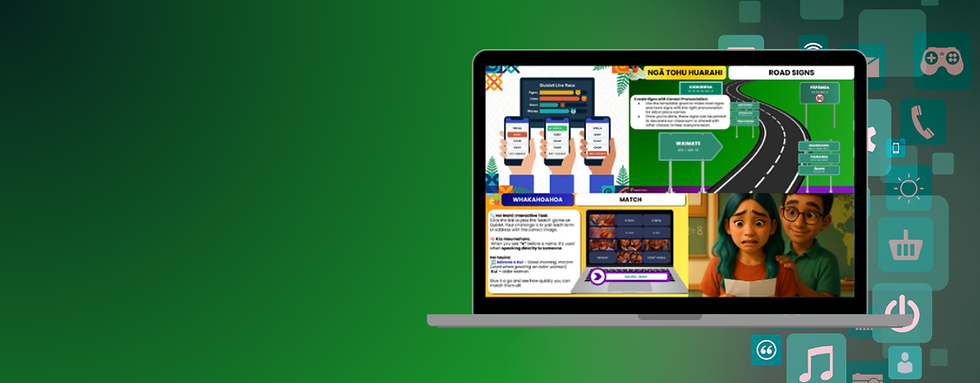
Learning becomes an exciting digital adventure in Te Whare Māminga, where ākonga step into immersive escape room experiences filled with clues, puzzles, challenges, and interactive storytelling powered by te reo Māori. Designed to build confidence through active participation, this unit encourages learners to communicate naturally while solving problems, collaborating with others, and unlocking each stage of the game through meaningful language use.
Through themes of tikanga, pūrākau, identity, and teamwork, ākonga strengthen their ability to describe people, places, feelings, and experiences using expressive and purposeful te reo Māori. As riddles are solved and digital missions unfold, learners develop confidence using classroom language, conversational structures, and creative storytelling in engaging and authentic contexts.
Blending technology, collaboration, and kaupapa Māori learning, this unit transforms te reo Māori into a living language of action, creativity, and connection. With interactive gameplay, digital design challenges, and collaborative problem-solving woven throughout, Te Whare Māminga creates a high-energy learning experience that keeps ākonga motivated, curious, and excited to use te reo Māori every step of the way.

Whāinga Paetae
Achievement Objectives
By the end of Levels 1–2, ākonga will be able to communicate confidently in simple te reo Māori contexts related to people, places, and experiences.
They will develop increasing confidence introducing themselves, describing locations, sharing personal information, and interacting respectfully using appropriate cultural conventions.
🌱 LEVEL 1
1.1 Greet, farewell, and acknowledge people and respond appropriately.
1.2 Introduce themselves and others and respond to introductions.
1.4 Communicate about personal information such as name, whakapapa, iwi, hapū, mountain, river, and hometown.
1.6 Understand and use simple polite conventions (acknowledgements, compliments, and expressions of regret).
🌱 LEVEL 2
2.5 Communicate about physical characteristics, personality, and feelings.
Putanga Ako
Learning Outcomes
The learning outcomes describe what ākonga will be able to demonstrate by the end of the unit. They focus on communicative competence, cultural participation, confidence, and relational growth, ensuring learning extends beyond language recall to meaningful application.
By the end of this unit, ākonga will be able to demonstrate the following skills:
By the end of this unit, ākonga will be able to use te reo Māori to create, solve, and present interactive digital challenges grounded in kaupapa Māori contexts.
Learners will strengthen their understanding of tikanga, pūrākau, and Māori values while developing vocabulary and sentence structures used to describe people, places, objects, and experiences. Through collaborative design tasks, ākonga will apply te reo Māori creatively to guide players through puzzles, clues, and storylines using digital tools and interactive media.
The unit also supports teamwork, communication, creativity, and critical thinking while encouraging learners to explore how language and storytelling connect identity, culture, and technology.
Aromatawai
Assessments
This unit includes a feature-style recorded presentation assessment designed to be engaging, achievable, and confidence-building. Learning is scaffolded to ensure ākonga absorb language meaningfully before producing it through expressive tasks.
Aligned with NZC Levels 1–2 and the Pou Reo framework — Kia Tika, Kia Rere, Kia Māori, and Kia Ora te Reo — assessment prioritises clarity, fluency, cultural integrity, and learner wellbeing. The focus is on authentic communication rather than technical perfection, encouraging courageous and enthusiastic reo use.
Ākonga will collaboratively design and present their own Digital Escape Room experience that showcases their developing te reo Māori skills and cultural understanding.
Learners will create themed escape rooms inspired by tikanga, pūrākau, or Māori values while developing clues, riddles, and instructions fully in te reo Māori.
They will use descriptive language to guide players through interactive storylines and explain the cultural inspiration, language choices, and design features within their final presentation.
The unit culminates in a collaborative Whare Māminga Challenge experience where learners test each other’s escape rooms, solve puzzles, and celebrate te reo Māori through creativity, teamwork, and play.
Ngā Hua o Roto
What's Included
Within this unit you will have everything you need to confidently deliver a high-quality, engaging te reo Māori unit - thoughtfully designed to reduce planning time while strengthening learning outcomes.
Each component is structured, practical, and aligned to curriculum expectations, ensuring clarity for kaiako and meaningful progression for ākonga.
📋 MĀHERE AKO – FULL UNIT PLAN
A complete ready-to-teach unit plan including curriculum links, learning intentions, teaching approaches, and clear progression aligned to NZC Levels 1–2.
📚 LESSON SLIDES AND SEQUENCING
Structured lesson sequencing with ready-to-use teaching slides, facilitation guidance, interactive tasks, and culturally grounded learning experiences linked to digital escape room design and gameplay.
🎯 INTEGRATED LANGUAGE MODES
Engaging activities that strengthen speaking, listening, reading, writing, viewing, and presenting through riddles, collaborative storytelling, puzzle-solving, and interactive digital challenges.
💻 DIGITAL DESIGN & ESCAPE ROOM CREATION
Creative learning experiences using tools such as Google Forms, Genially, and Deck.Toys to design interactive escape rooms, puzzles, coded messages, and immersive storytelling experiences.
📝 ĀKONGA EVALUATION & FEEDBACK
Formative reflection tools, learner feedback activities, and assessment support materials that track progress, strengthen confidence, and support future learning.
🌿 CULTURAL STORYTELLING & KAUPAPA MĀORI CONNECTIONS
Authentic learning experiences that connect te reo Māori, tikanga, pūrākau, and collaborative problem-solving through engaging and meaningful digital contexts.
tonoa mai
How to Order


Browse the catalogue
Browse our catalogue to explore the available themes, levels, grammar progressions, and programme durations to find the options that best suit your needs.
.png)
Complete Order
Complete the Te Reo Māori Unit Order form and select the units you would like to order.
.png)
Confirmation & Invoice
Once your form has been submitted, our team will contact you to confirm your request alongside an invoice.
.png)
Sharing & Access
After your order has been confirmed, your requested units will be created and uploaded into a shared digital folder for you and your team to access.